
This guide breaks down which containers actually hold up, what to look for before buying, and how odor control connects to compliant packaging if you're building a cannabis brand rather than just stocking a nightstand.
TL;DR
- Non-porous materials (glass, stainless steel) block odor better than most plastics
- Seal quality matters more than the container's price tag or claimed "airtight" rating
- Activated carbon neutralizes odor molecules but eventually saturates and needs replacing
- Dark, cool storage protects both scent and potency by slowing terpene breakdown
- Brands need child-resistant, state-compliant packaging, not just odor control
Why Cannabis Smells So Strong (And Why Containers Matter)
Cannabis aroma comes from terpenes, aromatic compounds that give each strain its signature smell. Researchers have identified more than 200 volatile compounds across cannabis genotypes, and those combinations shape each strain’s scent profile.
Several factors drive odor intensity and leakage:
- Strain and terpene profile — some cultivars are simply more aromatic than others
- Light exposure — a 2024 study on terpene degradation found light had the greatest effect on terpene evaporation, ahead of temperature
- Poor seals — gaps, worn gaskets, or thin plastic let odor molecules escape
- Porous packaging — some plastics and fabrics absorb and re-release smell over time
The container you choose either slows this process or accelerates it. Below is a breakdown of the main options.
Best Types of Smell Proof Containers for Cannabis
Judge any container against four criteria: seal quality, material porosity, UV protection, and portability. Here's how the main types compare for brand packaging, facility storage, and transport.
Glass Jars with Silicone Gasket Seals
Glass doesn't absorb odor or flavor, according to Pyrex's materials FAQ, so it stays a clean, low-odor contact surface. Pair it with a compression-fit silicone gasket lid and you get a tight mechanical seal—not just a lid that feels snug.
| Material | Seal / UV | Best Use | Watch-out |
|---|---|---|---|
| Non-porous glass | Silicone gasket; clear glass = low UV block | Display-ready jars, sample kits, short-run SKUs | Gaskets wear after repeated open/close cycles |
Stainless Steel / Metal Containers
Opaque metal blocks all light, which matters because UV speeds terpene breakdown through photolysis. Steel tins and cans are typically airtight, hold odor well, and often include space for a humidity pack—useful for longer holds between packaging and fulfillment.
| Material | Seal / UV | Best Use | Watch-out |
|---|---|---|---|
| Stainless steel / tinplate | Gasket or press lid; full light block | Long-term bulk or back-of-house storage | Heavier than plastic; higher unit cost |

Vacuum-Seal Plastic Containers
Button-press vacuum containers pull air out to slow odor escape at a lower cost than glass or steel. One caveat: even brands like Tightpac recommend an inner zip bag when smell containment is the top priority—vacuum alone is not fail-safe.
| Material | Seal / UV | Best Use | Watch-out |
|---|---|---|---|
| BPA-free plastic | Vacuum button; UV varies by opacity | Cost-sensitive packs, interim storage, travel kits | Rely on secondary bag for strong odors |
Activated Carbon-Lined Bags and Cases
Carbon adsorbs odor molecules in microscopic pores, which works well for transport bags moving multiple units. Filters reach saturation (breakthrough) over time, then stop taking on new odor and must be replaced on a maintenance schedule.
| Material | Seal / UV | Best Use | Watch-out |
|---|---|---|---|
| Carbon-lined fabric or hard shell | Zipper + carbon layer | Route transport, sales kits, multi-item carries | Carbon replacement after breakthrough |
Mason Jars With Fresh Lids
The classic two-piece lid (flat disc plus screw band) can form a vacuum as the jar cools. Odor control depends on the lid’s gasket compound staying fresh—not on the glass itself.
Unused lids hold seal quality for at least five years in the package; that does not apply to jars opened many times per shift. Clear mason glass also adds no UV protection, so pair with dark storage if potency retention matters.
| Material | Seal / UV | Best Use | Watch-out |
|---|---|---|---|
| Soda-lime glass | Two-piece lid; no UV block | Low-cost short-term holds in dark storage | Fresh lids required; poor light protection |

Match the type to your weakest criterion: gasketed glass or steel when seal and shelf life lead, carbon-lined carriers when portability leads, and vacuum plastic only when budget leads and you can add a secondary barrier.
How to Choose the Right Smell Proof Container
The biggest mistake buyers make: assuming "airtight" automatically means "smell-proof."
Airtight means air can't pass in or out. It says nothing about whether odor molecules can permeate the material itself, which is why some plastics fail even when they seal tightly.
Before you buy, weigh these factors:
- Seal durability — gaskets wear down; look for replaceable ones
- Material porosity — glass and steel outperform most plastics
- UV protection — clear containers need dark storage as a workaround
- Portability vs. home use — carbon bags travel well; jars don't
- Humidity compatibility — can the container hold a humidity pack for the 55–65% RH range most manufacturers recommend?
None of these factors work in isolation. A great gasket in a clear jar left on a sunny windowsill still degrades the flower faster than it should.

Smell-Proof Packaging Considerations for Cannabis Brands
Personal storage solves an individual's problem. Selling packaged flower or products is a different challenge entirely. Brands need packaging that does more than block smell:
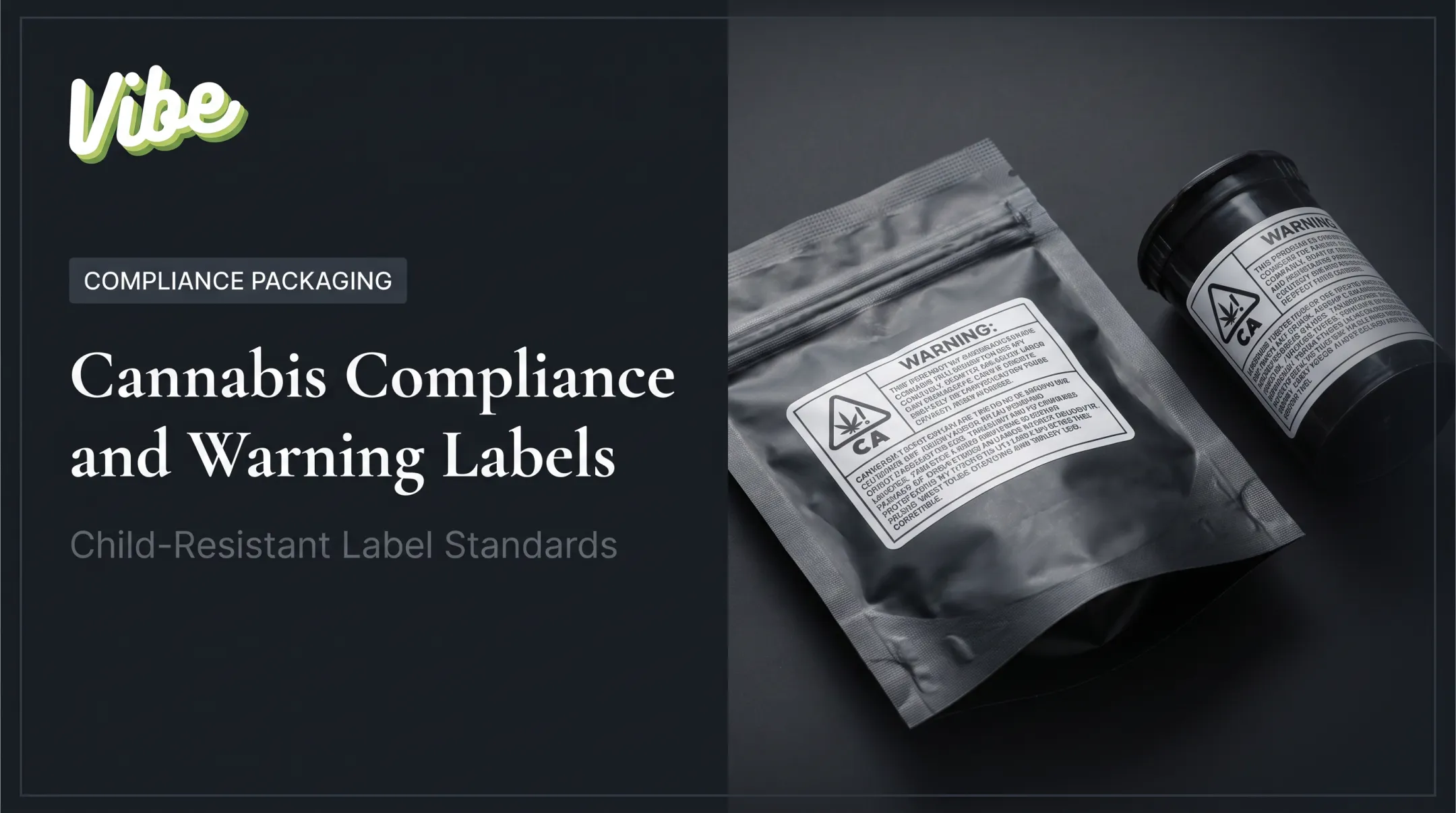
- Child-resistant closures that meet federal and state testing requirements
- State-specific labeling covering warnings, compliance symbols, and required product details
- Tamper-evident, resealable design that protects product integrity from manufacturing through the retail shelf These requirements vary by state. California's cannabis packaging rules and New York's Office of Cannabis Management guidance both mandate child-resistant, tamper-evident, resealable packaging, but testing and labeling details differ. There's no single nationwide "odor-proof" standard brands can point to. Each state's retail packaging rules need separate verification. As brands scale from a boutique pilot run to mass distribution, the packaging partner matters as much as the packaging itself. VibePKG works with cannabis brands on child-resistant certified packaging, state-specific labeling guidance, and fulfillment for programs ranging from 500 units to over 5,000,000. That support pairs domestic and overseas manufacturing with in-house production management and design. If you're evaluating a packaging partner, use the same checklist consumers use for containers:
- Material quality and consistency across production runs
- Seal integrity that holds up through shipping and handling
- Long-term reliability at scale, not just on a sample order

Frequently Asked Questions
Can dogs smell through smell-proof containers?
Trained detection dogs can still pick up trace scent if the seal is weak or the exterior isn’t clean. A well-sealed, clean container is your best defense, but no packaging is guaranteed against a trained nose.
Can you smell through airtight containers?
"Airtight" stops air exchange, but it doesn’t mean odor molecules can’t pass through the material. Some plastics are airtight yet still porous enough to transmit scent over time.
What materials make a smell-proof container?
Non-porous glass, stainless steel, and activated carbon linings are the most effective odor-blocking materials. Glass and steel don't absorb or re-release smell, while carbon actively adsorbs odor molecules.
Are mason jars smell proof for cannabis storage?
A fresh two-piece lid creates an adequate seal for short-term storage. The main tradeoff is a lack of UV protection, since clear glass lets light through and speeds up terpene breakdown unless you store the jar somewhere dark.
How long does weed stay fresh in a smell-proof container?
Freshness depends on humidity control (aim for 55–65% RH) and UV protection. Dark, cool storage with a stable humidity pack extends shelf life considerably compared to a clear jar sitting on a shelf.
What's the difference between airtight and smell-proof containers?
Airtight refers to preventing air exchange between the inside and outside. Smell-proof is a broader, less standardized claim about blocking odor molecules specifically, which can pass through some airtight materials even without air exchange.