
Many dispensary and cultivation operators struggle with the same headaches: overstocking flower that dries out before it sells, stockouts that send customers to competitors, and shrinkage from theft or sloppy recordkeeping. California's Department of Cannabis Control can issue citations up to $5,000 per violation for licensed operators, according to its compliance enforcement page — and inventory discrepancies are a common trigger.
This article breaks down what cannabis inventory management actually involves, why it matters, the steps to build a reliable system, and how packaging fits into the accuracy equation.
Key Takeaways
- Treat inventory as one system: seed-to-sale compliance, loss prevention, and margin control move together.
- Use FIFO so perishable cannabis products ship before potency and quality drop.
- Pair cycle counts with dedicated software to catch discrepancies before they become regulatory issues.
- Fix packaging and labeling errors early—mismatches drive bad reports and can trigger recalls.
What Is Cannabis Inventory Management?
Cannabis inventory management is the process of ordering, storing, tracking, and moving product — flower, edibles, concentrates, accessories — through every stage of the supply chain. It starts at intake and ends at sale or disposal, and it's inseparable from state-mandated seed-to-sale tracking through systems like Metrc or BioTrack.
Metrc is a secure, RFID-enabled platform that tracks cannabis from seed to sale. BioTrack's government traceability system covers cultivation, processing, and retail. These aren't optional add-ons. Colorado, for example, requires licensed businesses to use Metrc as the primary system of record — without a functioning account, a business can't legally operate.
There are three broad categories to manage:
- Cultivation and manufacturing inventory — raw materials, work-in-progress, finished goods
- Dispensary retail inventory — what's on the shelf and in the back room
- Packaging and supply inventory — the containers, labels, and materials that hold your product

Key Types of Cannabis Inventory
Within those categories, businesses generally track four core inventory types:
- Raw materials — flower, trim, biomass, and extraction inputs
- Work-in-progress — product mid-manufacturing, like distillate awaiting infusion
- Finished goods — sellable, tested, and tagged products
- Packaging and labeling supplies — tins, bags, tubes, and compliant labels waiting to be applied
Miss tracking on any one of these, and your seed-to-sale numbers stop matching reality.
Why Cannabis Inventory Management Matters
Poor inventory control creates efficiency gaps and legal exposure. California's DCC notes that incomplete transfers, future-dated entries, and inconsistent units of measurement create records that are difficult and time-consuming to investigate. That kind of confusion is exactly what regulators flag during audits. No single verified national figure tracks inventory-specific violations, but the mechanism is clear: sloppy records make diversion harder to detect and easier to pull off. The financial impact shows up in three places:
- Shrinkage and theft — one industry survey found theft accounted for 65% of reported inventory loss, though methodology details are limited
- Stockouts — lost sales when popular SKUs run dry
- Overstocking — capital tied up in flower that goes stale before it moves Customer trust takes a hit too. When your POS says a product is in stock but the shelf is empty, that shopper may not come back.

Key Steps in Cannabis Inventory Management
Building a reliable system comes down to six repeatable steps.
Choose cannabis-specific POS and inventory software Pick a platform that integrates directly with your state's tracking system. Metrc's own documentation on POS and ERP integration explains that a completed sale should automatically subtract inventory and transmit details in real time, which minimizes manual entry errors.
Standardize your product data Attach a batch/lot number, supplier info, and expiration or test date to every SKU before it enters the system. Inconsistent data entry is one of the fastest ways to create audit headaches.
Define clear roles Assign a Compliance Officer, Inventory Manager, and budtender-level responsibilities. Segregation of duties makes internal theft harder and audits easier.
Build a repeatable workflow Document your process for receiving, storing, auditing, and disposing of product, and follow it the same way every time.
Run regular cycle counts Reconcile physical stock against your system records on a set schedule, not just when something looks off.
Let sales data drive purchasing Use historical sell-through to set par levels instead of guessing at reorder quantities.

Best Practices and Strategies for Cannabis Inventory Management
FIFO and the Four-Step Shelving Process
FIFO — first in, first out — means selling your oldest stock before newer batches. Cannabis Business Times has recommended FIFO since 2020 specifically to keep flower from drying out or going stale before reaching customers.
A simple four-step FIFO shelving process:
- Receive new stock and check batch/lot numbers against your system.
- Place new inventory behind existing stock, never in front.
- Pull from the front of the shelf for every sale.
- Rotate and re-verify shelf positions during each cycle count.

Audit Schedules and ABC Analysis
Set a fixed cadence:
- Weekly cycle counts for dispensary retail floors
- Monthly physical counts for cultivation and manufacturing inventory
- Surprise audits on top of the schedule to deter internal theft
Use that cadence with ABC analysis: classify products by value and velocity, then apply tighter controls to "A" items (high-value, fast-moving) than to B and C stock.
Weight vs. Unit-Based Auditing
Match the audit method to the product:
- Flower: weight-based counts — sold by weight and subject to moisture loss
- Packaged goods: unit-based counts for pre-rolls, edibles, and vape cartridges
Mixing methods creates false discrepancies that can take hours to investigate.
Secure, Climate-Controlled Storage
Keep inventory in secure, climate-controlled storage. Temperature and humidity swings degrade product quality, and unsecured areas are where diversion happens.
Cannabis Inventory Software and Packaging Considerations
Generic retail POS tools weren't built for state compliance reporting. Cannabis-specific software matters because it offers:
- Real-time sync with Metrc or BioTrack, reducing duplicate manual entry
- Automated compliance alerts flagging expiring COAs or untagged inventory
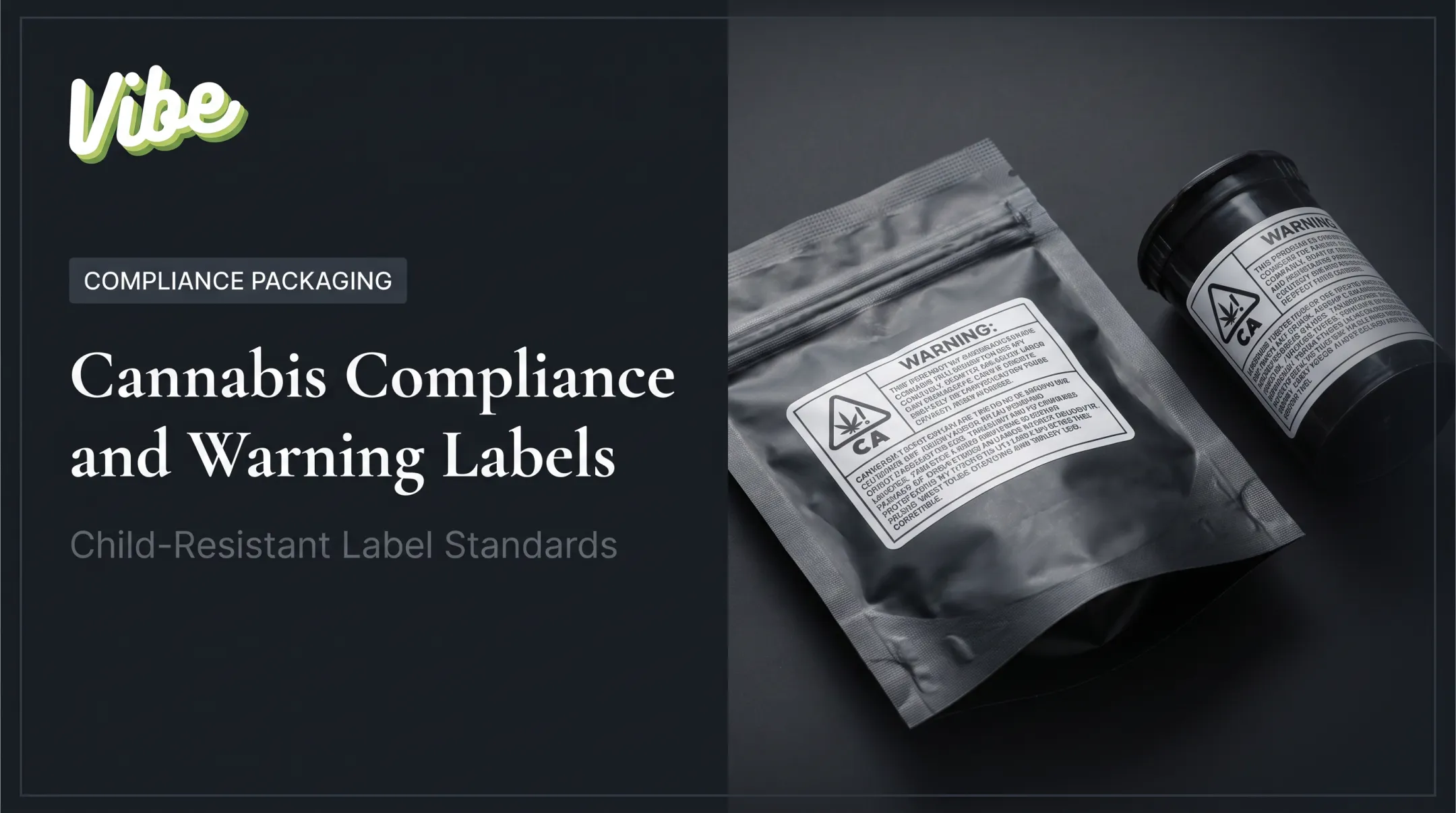
- Package-level tracking tied to weights, test results, and batch IDs But software alone won't fix inventory accuracy if your packaging doesn't match your labeling requirements. Non-compliant or mislabeled packaging is a documented recall trigger. New Jersey's Cannabis Regulatory Commission specifically lists improper packaging or labeling among reasons product gets pulled and quarantined. A packaging partner belongs in your inventory strategy, not just your supply line. VibePKG works with cannabis brands on child-resistant, state-specific labeling needs, with formats built to hold up during audits and reduce label-to-product mismatches:
- Child-resistant zipper Mylar bags
- Pop-top tubes and dram jars
- CR tins VibePKG also lets brands hold inventory and ship packaging on demand. It warehouses packaging, handles kitting, and releases stock when orders need to ship. For growing operators, that model helps avoid packaging shortages that stall product intake and throw off the inventory workflow. Stock packaging items typically ship fast, without waiting on a full custom production run.

Frequently Asked Questions
What are the key steps in cannabis inventory management?
Choose compliant software integrated with your state's tracking system, standardize intake data, assign clear roles, and run consistent audits.
What is the best software for cannabis inventory management?
The best choice is a cannabis-specific POS integrated with your state's seed-to-sale system, whether that's Metrc or BioTrack. Look for real-time sync and automated compliance alerts.
What are the main types of cannabis inventory management?
Three categories: cultivation/manufacturing inventory (raw materials, work-in-progress, finished goods), dispensary retail inventory, and packaging/supply inventory.
How often should dispensaries audit their inventory?
Weekly cycle counts work well for dispensary retail floors, with monthly physical counts for cultivation and manufacturing. Add unscheduled surprise audits to deter theft.
Why is FIFO important for cannabis products?
FIFO reduces spoilage risk and helps ensure lab-tested products sell before their Certificate of Analysis expires, since COA validity periods vary by state.
How does packaging affect cannabis inventory accuracy?
Mislabeled or non-compliant packaging can cause reporting mismatches and even trigger recalls. Accurate, lot-matched labels keep physical stock aligned with seed-to-sale records.